External Image

Johann Friedrich Stucke

Birth Date: 

2/27/1822

Passed Away: 

13 August 1875

Parents: 

Father: Franz Wilhelm Stucke, Mother: Dorothea Amalie Neuhaus

Spouse(s): 

Johanna Wilhelmine Rodenbeck

Children: 

Anna Charlotte Stucke, Louisa Stucke, Frank Stucke, Charles Dietrich Stucke, Frederick Stucke, Julie Johanne Amalie Stucke, Minnie Stucke

Johann Friedrich Stucke was born on February 27, 1822, in the ancient city of Minden, located in the Kingdom of Prussia’s Westphalian province. Minden sat along the Weser River, its streets cobbled with centuries of history and its people shaped by the memory of French occupation and the reforms that followed the Napoleonic Wars. The region was known for its Protestant work ethic, its skilled artisans, and its staunch loyalty to the Prussian crown.

Chapter 1: Roots in Westphalia – The World of Johann Friedrich Stucke

His father, Johann Franz Stucke, likely belonged to the working or lower middle class, perhaps owning land or operating a trade, as later inheritance documents suggest property was held in the family and passed to Johann Friedrich across continents. Such stability would have placed the Stuckes among the respectable classes — not wealthy, but neither destitute. It was a status hard-won in a rigid society that prized discipline and order, particularly under the watchful eye of the Prussian monarchy.

Growing up in Minden, Johann would have heard the tolling of the church bells each morning — Lutheran, most likely — calling parishioners to worship. Like most boys of his time, he would have been taught obedience, literacy, and reverence for the fatherland. By adolescence, he was almost certainly expected to serve in the military, a civic duty and rite of passage for young Prussian men.

🎖 Military Service in the Prussian Army

According to records from the Prussian Military Archives, Johann Friedrich Stucke served in the armed forces of the Kingdom of Prussia sometime before his emigration. This service would have imparted him with precision, physical endurance, and perhaps an early exposure to leather and metalwork — foreshadowing his later career as a harness maker in America. The Prussian military machine, renowned throughout Europe, was both a source of national pride and a means of social mobility.

If Johann marched with his regiment through the wide boulevards of Berlin or drilled in formation under stern commanders, he would have absorbed the essence of Prussian identity: devotion to duty, efficiency in craft, and restraint in all things. These were values he would carry across the Atlantic.


✈️ Departure from Germany

We do not know the exact year Johann left Prussia, but it was likely during the late 1840s — a period of political unrest and economic pressure. The failed liberal revolutions of 1848 swept across the German states, stirring dreams of democracy that were brutally crushed by conservative forces. Young men like Johann faced a stark choice: continue under the old regime, or strike out for freedom and opportunity in the New World.

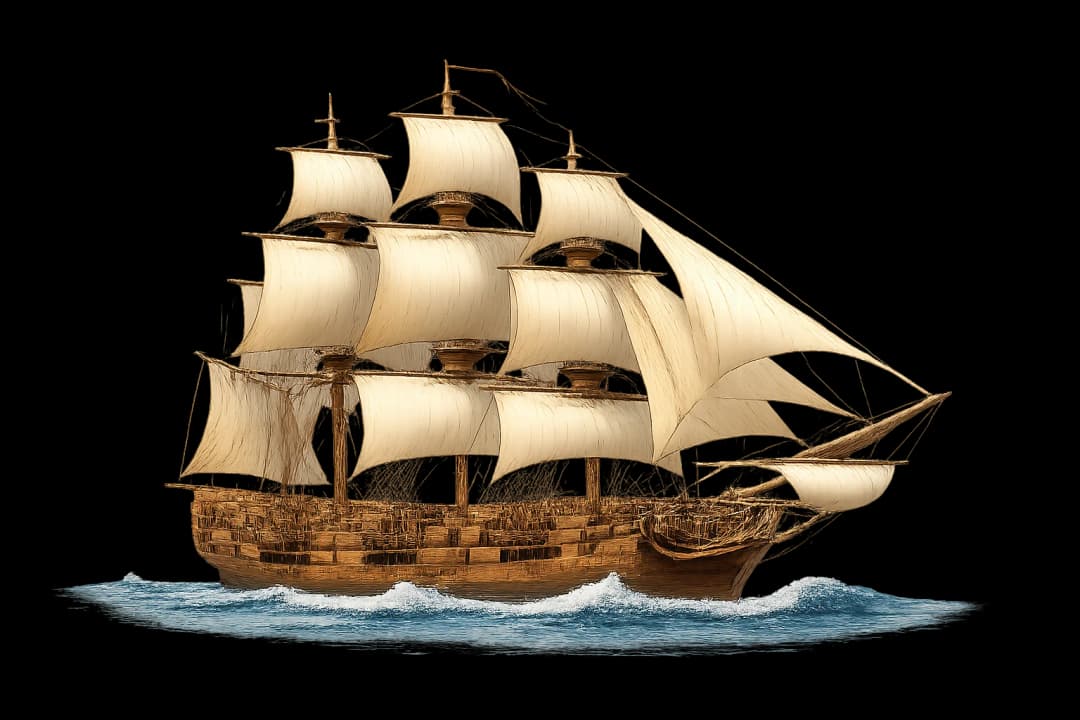
Sometime before 1849, Johann boarded a ship bound for America. Whether alone or in the company of others from his town, the voyage would have taken several weeks, crossing the rough Atlantic. He may have landed in New York City, where a small but growing community of German immigrants was beginning to take root. These newcomers — bakers, blacksmiths, tailors, and soldiers — found work where they could and leaned heavily on familiar institutions like churches and mutual aid societies.


💍 Arrival and Establishment in New York

In 1849, Johann married Johanne Wilhelmine Rodenbeck at Madison Street German Presbyterian Church in Manhattan — a congregation that served the spiritual and social needs of German-speaking Protestants. The marriage record lists him by name, affirming not only his presence but his immediate integration into an ethnic community that provided both sanctuary and opportunity.

Their union was a merging of two immigrant souls navigating a new world, balancing Old World customs with New World pressures. From this moment on, Johann was not just a son of Prussia — he was a husband, a builder of a family, and soon, a working man on the crowded streets of New York.

Chapter 2: Through Fire and Iron – Johann in the Age of Upheaval

Johann Friedrich Stucke arrived in America just as the world he left behind unraveled. The 1848 Revolutions that spread across Europe were more than political – they were deeply personal for those who had grown up under monarchs and militarism. In Prussia, students, craftsmen, and former soldiers alike demanded a constitution, civil rights, and an end to hereditary rule. And when the revolt failed, thousands, like Johann, quietly slipped away.

By 1850, Johann was married and living in Manhattan’s 17th Ward, part of a dense German-speaking enclave. The 1855 New York State Census shows Johann, age 33, working as a harness maker, a trade that offered modest but steady income in a horse-powered city. With him were his wife Johanna and their young children — among them, daughters named Louisa and Emma.

Johann’s hands, once trained for military precision, now stitched leather in candlelit rooms off Rivington or Jackson Street. His craft was part of the booming trade economy that powered New York’s growth before the Civil War. Saddlery and harness-making were essential in a city that relied on horses for transport, freight, and commerce. The streets echoed with the sound of hooves and the clatter of iron wheels, and Johann’s work was laced invisibly into the very pulse of the city.

🪖 The Civil War: Loyalty, Labor, and Loss

When war erupted in 1861, it wasn’t just America that was torn — immigrant communities were too. German-Americans in particular faced complex questions: Would they fight for a country that still saw them as outsiders? Many did. The Union Army even formed ethnically distinct units, like the German-dominated 9th Ohio and 52nd New York Infantry. Whether Johann himself took up arms is not confirmed in available records, but the 1862 IRS tax rolls show he remained at work as a harness maker at 74 Jackson Street, paying taxes on income and goods.

It’s likely that Johann contributed to the war effort through his trade. Saddlers were indispensable to the Union military — cavalry regiments, artillery teams, and transport wagons all needed leather gear. His business may have shifted toward producing wartime equipment. Even if he didn’t sew for soldiers directly, he sustained the homefront economy, feeding a supply chain that extended to the battlefield.

The Civil War also touched his household more intimately. With sons reaching working age, the specter of the draft loomed. Even if his children were too young, neighbors and churchgoers would have left for war, some never returning. Death notices filled the German-language newspapers; black-bordered broadsides appeared on tenement walls. It was a time of fear, prayer, and quiet determination.


🏙️ Postwar America: Reconstruction and Urban Growth

By the end of the Civil War in 1865, the Stucke family had grown — the 1865 New York State Census lists multiple children, including Edward, Charles, and William. Johann’s occupation remained the same: harness maker, a trade he passed to at least one of his sons by 1870. Their neighborhood, meanwhile, was changing. Immigrant waves brought Poles, Italians, and Irish into the same streets where German was once dominant.

In 1870, Johann and his family appear in the census in Union Township, Hudson County, New Jersey. This move marked a new phase — from the dense immigrant blocks of Manhattan to the industrializing edges of the New York metropolitan sprawl. Union City (formerly part of Union Township) was rapidly developing, fed by factories and the expansion of railroads and ferry lines to the city.

For Johann, the move may have been practical. Housing was cheaper, streets less crowded. His trade remained relevant even as streetcars and industry modernized. Harness makers, blacksmiths, and stablemen still formed the muscular core of transportation and logistics.

But it was also a move that spoke to aspiration — to give his children better footing in America. From tax records and censuses, we know he was not wealthy, but stable. His name is listed not among paupers or boarders, but heads of households, taxpayers, and skilled artisans. He owned tools, paid federal tax on his earnings, and left behind a will.


⚕️ Health, Mortality, and Urban Realities

The 1870s were not easy years. Cities like New York and Union City were still fighting frequent epidemics — cholera, typhoid, tuberculosis. While no record names Johann’s cause of death, he died in 1875 at the age of 53 — younger than many, but not uncommon for the era. The fact that his wife and children continued to live and work nearby suggests a man who left behind a rooted family, a legacy of faith, work, and tenacity.

Chapter 3: Harness and Home – Johann’s Family Life and Work in America

By the end of the Civil War, Johann Friedrich Stucke had done what many could not — he had survived revolution, migration, and upheaval, and he had held together a family and a trade.

In the 1860 Census, Johann appears with his wife Johanna and several children in New York’s 17th Ward. His listed occupation: harness maker. The family lived modestly, likely in a narrow tenement or rented apartment among other German-speaking families. Their daily life would have been shaped by noise, work, and shared resilience: the whinny of horses outside, the scent of boiled cabbage or coffee wafting from the next flat, the thunder of iron wheels on cobblestone.

His wife Johanna ran the home — cooking meals on a cast-iron stove, mending garments by candlelight, teaching the children catechism in their native German. Children like Louisa, Emma, and little Edward would have played in the stairwells or alleyways behind the building, watched closely by neighbors and older siblings.

🧵 The Work of Leather and Sweat

Harness making was not glamorous work. It required hand-stitching thick hides with waxed thread, bending over a wooden horse bench, and inhaling the sharp scent of leather and oil. Johann’s fingers, strong from his military years, would have been calloused and ink-stained. He may have worked in a small shop — alone or with a partner — or out of his home. Customers included cab companies, delivery firms, and private coachmen. In a pre-automobile world, his work literally kept the city moving.

Tax records from the early 1860s list him at 74 Jackson Street in New York, paying modest assessments for his trade tools. This was not a wealthy life, but it was self-sustaining. Harness makers were respected tradesmen — part of the skilled working class that bridged hand labor and early industry.


🏡 The Move to New Jersey

Sometime between 1865 and 1870, Johann relocated his family from Manhattan to Union Township in Hudson County, New Jersey — now part of modern-day Union City. In the 1870 census, we find him listed again: J. F. Stucke, age 48, working as a saddler, with Johanna and multiple children in the household.

Why the move? Perhaps rents in Manhattan were rising, or perhaps Union Township offered cleaner air, a slower pace, or more stable housing. The ferry across the Hudson allowed access to Manhattan markets while building a new life on more open ground. Johann, now nearing 50, may have been looking for a place to let his sons take root.

The Stucke household in New Jersey included sons Charles and William — likely apprentices in their father’s trade — and daughters who helped with household duties or assisted younger siblings. In the 1875 New Jersey State Census, the family remained intact, a rare feat for a working-class immigrant clan of that era.


🙏 Church, Language, and Community

Though no direct record of Johann’s specific church in Union City survives, his marriage in the Madison Street German Presbyterian Church and entries in church registers from the 1850s–60s strongly suggest lifelong Protestant devotion. German-speaking congregations in New Jersey provided spiritual structure, taught literacy through catechism, and offered support for widows, sick children, and unemployed fathers.

Sunday mornings were likely sacred. The family dressed in their best — wool suits and cotton dresses hand-sewn by Johanna — and walked to a nearby chapel where hymns rang out in German. These churches were more than places of worship; they were repositories of cultural continuity.


💼 Sons and Trade

By 1870, Edward and Charles were young men. Johann likely trained them in saddlery, passing down the skills he had learned in Prussia and honed in Manhattan. Census records show multiple Stucke sons later involved in skilled trades — carpentry, leatherwork, and labor — a sign that Johann's work ethic took firm root.

Johann’s workshop was both a place of business and of bonding. He may have handed tools to a 12-year-old Charles or praised William for his first solo stitch on a harness collar. These were quiet rituals — passed from father to son, unnoticed by the world but vital to family survival.


🕯️ The Final Years

By the time of Johann’s death in August 1875, the Stuckes had spent more than two decades building their life in America. His probate will — which names his wife and children — confirms that Johann left behind property inherited from his own father in Minden, Germany. This legal thread stretched across the Atlantic, linking past to present and binding generations through duty and legacy.

He died at age 53, still listed in public records as a “harness maker.” His wife Johanna, a quiet matriarch, lived on for many years, raising the youngest children and maintaining the family home.

Chapter 4: “Let It Be Divided Equally” – The Death and Legacy of Johann Friedrich Stucke

On a warm summer day in August 1875, Johann Friedrich Stucke drew his final breath in Union Township, Hudson County, New Jersey. He was 53 years old — not old by today’s standards, but a respectable age for a man who had worked with his hands every day since boyhood. The cause of death was not recorded in surviving documents, but we know this: he died at home, a husband, a father, and a man who had laid claim to both an Old World inheritance and a New World promise.

The official death register lists him plainly: “John F. Stucke, harness maker, born in Germany, age 53”. These few words distilled a life of complexity into bureaucratic fact. But behind that simple entry was a web of devotion, craft, and migration that had spanned continents.

Johann left behind his beloved wife Johanna and several children still living at home. In his will, written with solemn care, he instructed that all his real and personal property — especially that which he had inherited from his father, Johann Franz Stucke of Minden, Prussia — be given to Johanna “for and during the term of her natural life.” After her passing, it was to be “divided equally among the children of my body begotten.”

His language was legal, but tender. He had not amassed great wealth, but he ensured that what he had — perhaps a small house, some tools, personal belongings, or an inheritance from abroad — would remain with those he loved. It was the will of a man who had known instability and had fought to create something lasting.


👩‍👧 The Matriarch Alone

In the years after Johann’s death, the family continued — a tribute to his foresight and Johanna’s endurance. The 1880 Census shows Johanna still living in New Jersey, the head of household, surrounded by her children: William, Mary, Anna, and Emma.

Johanna, now in her 50s, likely managed the home with quiet authority. She had buried her husband, but not her resolve. She may have taken in sewing, laundry, or boarders to supplement her son’s earnings. Her days would have begun early — tending a small stove, preparing meals of potatoes, sausage, or rye bread, sending the younger children off to work or school, and praying for their safety each night.

We can imagine her sitting in a straight-backed chair by the window, her hands folded around a worn prayer book, the wind coming through the curtains, her late husband’s tools still hanging neatly in the workshop Johann had once ruled with quiet precision.


🧬 The Generational Thread

Though Johann’s name eventually faded from public memory, his legacy lived on in his children and grandchildren. Census records show his sons continuing in manual trades — carpentry, leatherwork, and related crafts — mirroring their father’s industry. His daughters married and settled locally, carrying with them the discipline and faith of their upbringing.

The family’s migration from Prussia to Manhattan to Union City mirrored the broader arc of the American immigrant story. From the cobbled streets of Minden to the tenements of Jackson Street and finally the row houses of New Jersey, the Stuckes adapted — never quite wealthy, never prominent, but enduring.

Johann never lived to see the skyscrapers rise or the automobile replace the horse — but his harnesses and saddles helped propel that age. He never saw his grandchildren fully Americanized — fluent in English, dressed in modern styles, perhaps forgetting their grandfather’s accent — but his sacrifice made their lives possible.


🕯️ Cultural Memory and Final Rest

Johann was buried near his home in Hudson County, likely in a local Lutheran or Protestant cemetery frequented by German families. His grave may have been marked with a simple stone — name, birth, death, and perhaps a cross. If he had a funeral, it was surely held in German, with Psalms sung by candlelight and his children solemn in mourning dress.

While no surviving photograph of Johann is known, his image survives in the quiet echoes of historical documents — a name scrawled in looping 19th-century ink, a signature on a tax form, the label “harness maker” beside his name on census lines. Each entry is a footprint on the path of history.

Search Family Members

Media Archive Search

Search for Photos, Census Records, Marriage Certificates & More

Legacy in Action

The informality of family life is a blessed condition
that allows us all to become our best while looking
our worst.

Census Records

Join the journey of rediscovering your roots and building stronger family bonds. From fun quizzes to newsletters & virtual reunions, stay connected and celebrate the legacy that unites us all.
Newspaper Clippings

Join the journey of rediscovering your roots and building stronger family bonds. From fun quizzes to newsletters & virtual reunions, stay connected and celebrate the legacy that unites us all.
Timeline

1822

Born in Minden, Westphalia, Prussia

1849

Married in New York City

1856

Lived in NYC, Ward 7, Occupation: Harness Maker

1866

Residence in Weehawken, Hudson, NJ (Harness Maker)

1875

Died in Union City, Hudson, New Jersey

Military Records

Scroll to Top